Alzheimer’s disease is one of the toughest conundrums facing contemporary medicine. Affecting millions of people worldwide, this mysterious, progressive neurodegenerative process, which represents the most common cause of dementia in the world, still… read more
In late October 2026, the European Partnership Resilient Cultural Heritage will announce its first call for international research projects… czytaj dalej
In late October 2026, the European Partnership Resilient Cultural Heritage will announce its first call for international research projects entitled Foundations for climate-resilient cultural heritage: Assessing and managing impact and risk, dealing with damage and loss.
The European Partnership on One Health Antimicrobial Resistance (EUP OHAMR) is pleased to pre-announce the Joint Transnational Call (JTC) 2027 – Understand, Model and Stop AMR Transmission, which will open on 18 November 2026. The call is co-funded by the… czytaj dalej
The European Partnership on One Health Antimicrobial Resistance (EUP OHAMR) is pleased to pre-announce the Joint Transnational Call (JTC) 2027 – Understand, Model and Stop AMR Transmission, which will open on 18 November 2026. The call is co-funded by the European Union.
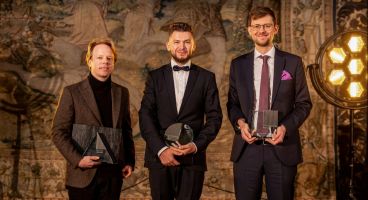
Piotr Achinger, Dawid Kobiałka and Paweł Sikorski are the winners of this year’s NCN Award. This most prestigious distinction for early-career researchers was presented at the Wawel Castle on 14 October. The awarded researchers work in Warsaw and… czytaj dalej
Piotr Achinger, Dawid Kobiałka and Paweł Sikorski are the winners of this year’s NCN Award. This most prestigious distinction for early-career researchers was presented at the Wawel Castle on 14 October.
On Wednesday, 14 October, the winners of the 2026 NCN Award will be announced during the ceremony at the Wawel Castle. The ceremony will be broadcast live on our YouTube channel, starting at 6:30 p.m. The NCN Award is the most prestigious distinction… czytaj dalej
On Wednesday, 14 October, the winners of the 2026 NCN Award will be announced during the ceremony at the Wawel Castle. The ceremony will be broadcast live on our YouTube channel, starting at 6:30 p.m.
Under the Weave-UNISONO call, if a joint proposal is submitted to the SNSF as the lead agency by 1 October 2026, an NCN proposal must be submitted electronically via the OSF submission system as soon as possible following the submission of the joint… czytaj dalej
Information for Polish research teams on to the deadlines and rules of preparing joint and NCN proposals within the Weave-UNISONO.
The National Science Centre (NCN), in cooperation with the National Natural Science Foundation of China (NSFC), plans to launch the fifth edition of the call for research projects carried out by Polish and Chinese research teams.Under the SHENG 5 call,… czytaj dalej
The National Science Centre (NCN), in cooperation with the National Natural Science Foundation of China (NSFC), plans to launch the fifth edition of the call for research projects carried out by Polish and Chinese research teams.
The NCN Council has adopted the amended terms of participation in NCN grant calls announced in June, according to which the number of… czytaj dalej
The NCN Council has adopted the amended terms of participation in NCN grant calls announced in June, according to which the number of proposals that a principal investigator may submit in a single year is limited, and eligibility for subsequent OPUS grants is linked to participation in ERC calls.
Under the Weave-UNISONO programme, researchers from the University of Silesia in Katowice alongside their research partners from the Hamburg University of Technology (TUHH) will study the properties of water trapped inside nanometer-wide pores under to… czytaj dalej
Under the Weave-UNISONO programme, researchers from the University of Silesia in Katowice alongside their research partners from the Hamburg University of Technology (TUHH) will study the properties of water trapped inside nanometer-wide pores under to explore the possibilities of using water for storage and recovery of currently wasted low-grade heat.
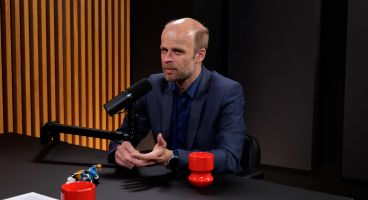
In the 10th episode of the series, we talk to Rafał Szabl, chemist from the Wrocław University of Science and Technology, who studies how simple chemical compounds could have given rise to the basic building blocks of life on the early Earth … czytaj dalej
In the 10th episode of the series, we talk to Rafał Szabl, chemist from the Wrocław University of Science and Technology, who studies how simple chemical compounds could have given rise to the basic building blocks of life on the early Earth.
In cooperation with the European Biodiversity Partnership Biodiversa+ we have launched a call for transnational and interdisciplinary research projects in the field of biodiversity conservation science. A total of 1 million EUR is allocated for all… czytaj dalej
In cooperation with the European Biodiversity Partnership Biodiversa+ we have launched a call for transnational and interdisciplinary research projects in the field of biodiversity conservation science. A total of 1 million EUR is allocated for all Polish research teams.
Staff at research institutions administering NCN-funded projects, fellowships and scholarships are welcome to join our training webinar.The meeting will be held on 6 October 2026, at 10 PM through Clickmeeting. During the webinar, we will discuss project-… czytaj dalej
Staff at research institutions administering NCN-funded projects, fellowships and scholarships are welcome to join our training webinar.
NCN will participate in the 35th Economic Forum in Karpacz which will start on 8 September 2026. It is one of the largest gathering of representatives from science, economy and politics in Central and Eastern Europe.We will take part in the panel… czytaj dalej
NCN will participate in the 35th Economic Forum in Karpacz which will start on 8 September 2026. It is one of the largest gathering of representatives from science, economy and politics in Central and Eastern Europe.