
The research team led by Professor Marcin Poręba from the Wrocław University of Science and Technology in collaboration with the American researchers from Genentech led by Professor Vishva M. Dixit have found a way to prevent a dying cell from breaking apart. Their research findings have just been published in Nature. NCN has funded the research conducted by Polish researchers.
Dr hab. Marcin Poręba, Wrocław University of Science and Technology’s Professor, is a successful applicant in multiple NCN calls. The research of his team, which lead to a publication in Nature, was funded from one of his first grants awarded under OPUS 15. The project aimed to dissect the mechanisms of proteolytic cross-talk underlying pyroptosis, a programmed inflammatory cell death.
When a defence mechanism gets out of control
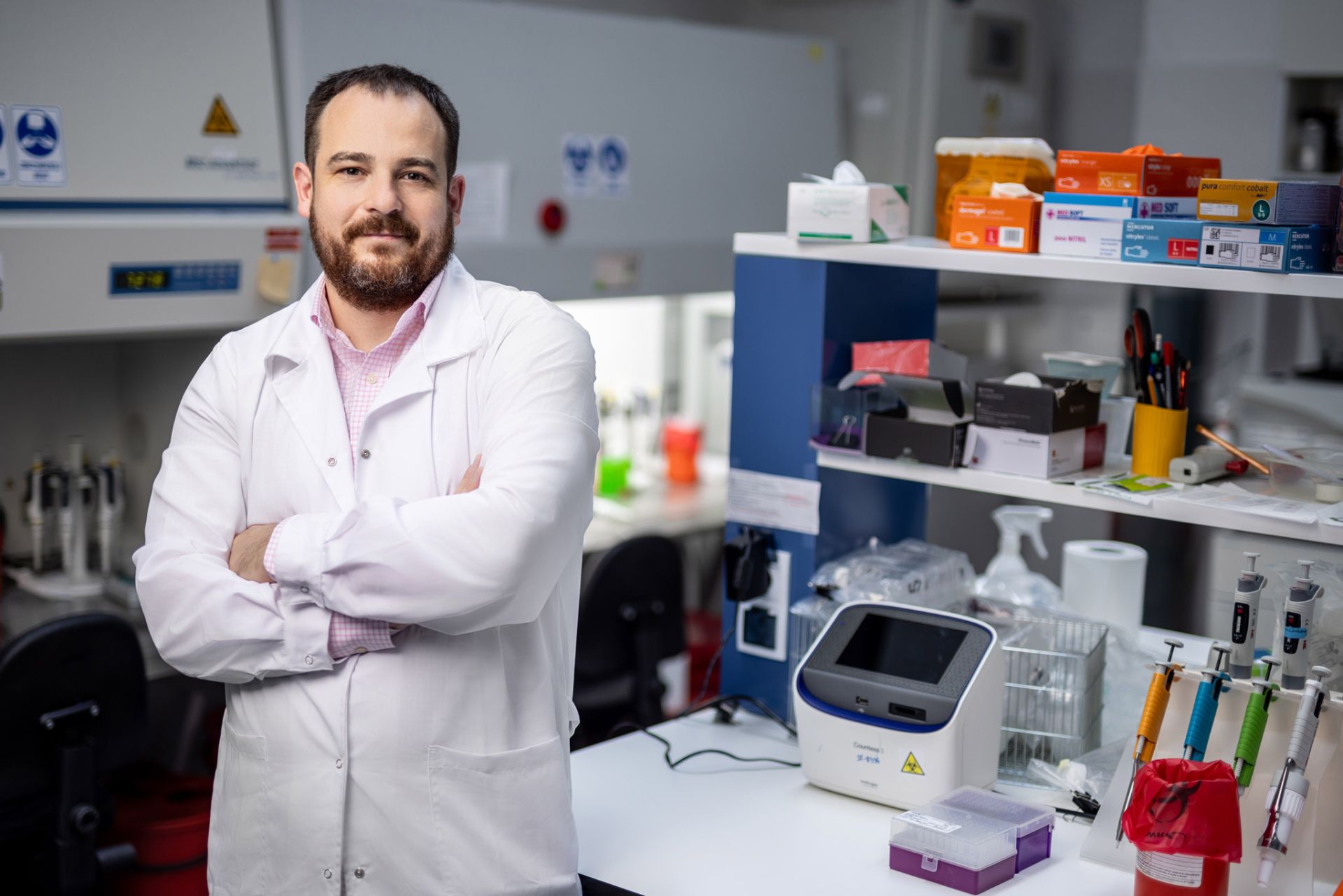 Prof. Marcin Poręba, photo by Łukasz Bera
“Pyroptosis is one of the ways in which the body defends itself against infections and other threats. It is a controlled mechanism of cellular self-destruction accompanied by the activation of a powerful inflammatory response,” explains Professor Marcin Poręba. “This response helps the body combat a threat. The problem arises when pyroptosis becomes excessive or uncontrolled. It can then intensify inflammation and lead to tissue damage.”
How can pyroptosis be stopped even after it has begun? Previous trials aimed at blocking the responsible enzymes known as inflammatory caspases have had limited efficacy because the compounds also entered healthy cells, resulting in insufficient therapeutic effect and unwanted off-target activity.
The scientists turned the problem on its head. Rather than developing an inhibitor capable of crossing cell membranes as easily as possible, they focused on compounds that penetrate healthy cells very poorly. They discovered that when pyroptosis begins, pores are formed in the cell membrane by gasdermin D. The same pores that cause cell death can serve as gateways through which inhibitors can be selectively delivered to vulnerable cells.
The project’s most important discovery was demonstrating that pyroptosis can be stopped even after it has begun. Once the inhibitor enters the cell through the first pores, it blocks caspases and prevents the formation of further pores. It also reduces cytokine release. Some of the cells genuinely survived and retained their ability to continue growing. Cell studies and a study in a mouse model demonstrated a marked reduction in the inflammatory response. The researchers emphasise that, although treatment has not been discovered yet, this new strategy may support the development of treatments for diseases such as sepsis, acute respiratory distress syndrome and COVID-19.
International, intersectoral, and cross-generational success
The publication in the prestigious journal Nature is a result of collaboration between of the research groups led by Prof. Marcin Poręba from the Wrocław Tech and Prof. Vishva M. Dixit from Genentech, USA, named as the paper’s corresponding author. The research team of Professor Poręba combines the expertise of experienced scientists with the talent of early-career researchers.
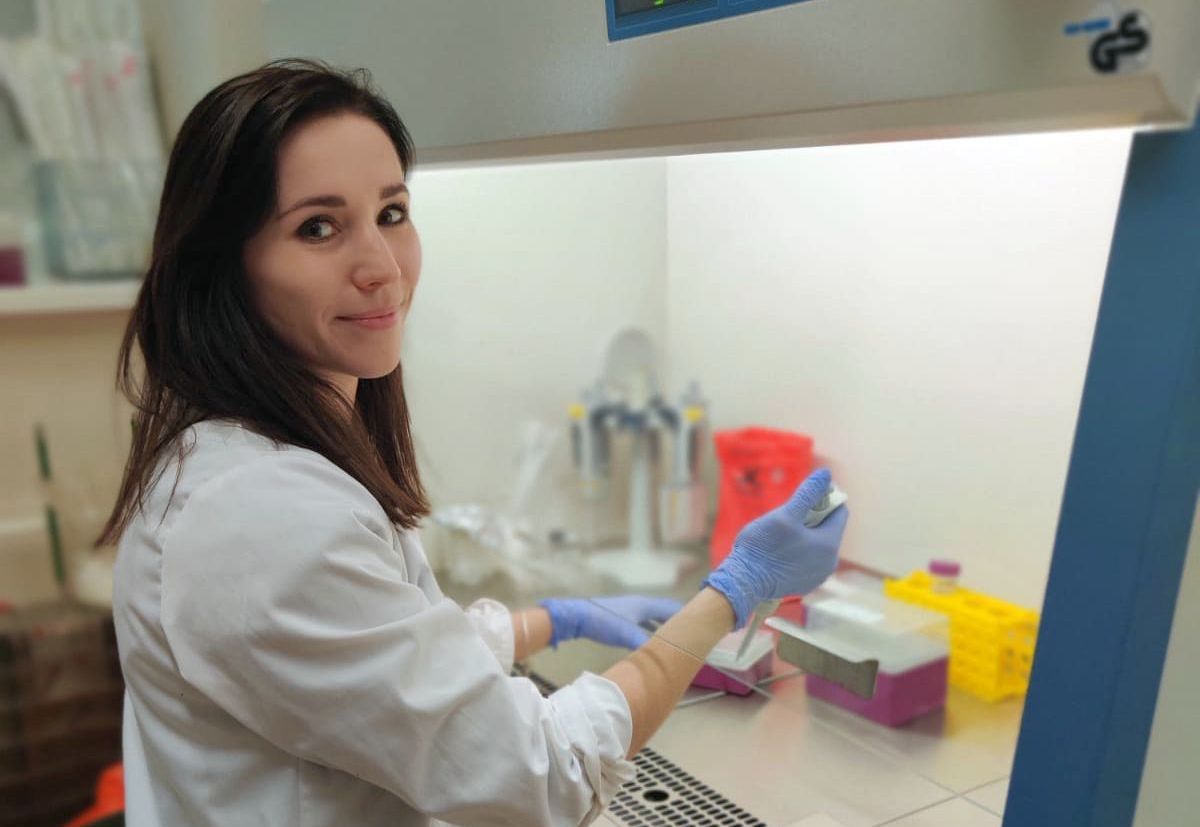 Dr. Eng. Katarzyna Groborz, photo: PWr
A pivotal role in the research was played by the first author of the research paper Dr inż. Katarzyna Groborz, a graduate of and PhD student at the Wrocław University of Science and Technology who continued her research during her post-doctoral fellowship at Genentech.
Dr. Eng. Katarzyna Groborz, photo: PWr
A pivotal role in the research was played by the first author of the research paper Dr inż. Katarzyna Groborz, a graduate of and PhD student at the Wrocław University of Science and Technology who continued her research during her post-doctoral fellowship at Genentech.
“The project’s most important discovery was demonstrating that pyroptosis can be stopped even after it has begun. We showed that there is a short therapeutic window during which caspase inhibition interrupts the process and enables cells to regain their ability to grow and divide. By using pores formed by gasdermin D, we were able to deliver inhibitors selectively to cells in which pyroptosis had already begun,” says Dr Katarzyna Groborz.
The other co-author is Melissa E. Truong from Genentech. Doctoral students Julia Nguyen and Małgorzata Kalinka also participated in the project, contributing to the synthesis of the inhibitors and their kinetic analysis. Their research was funded under OPUS. Another co-author is Professor Marcin Drąg, the developer of the HyCoSuL technology used in the research.
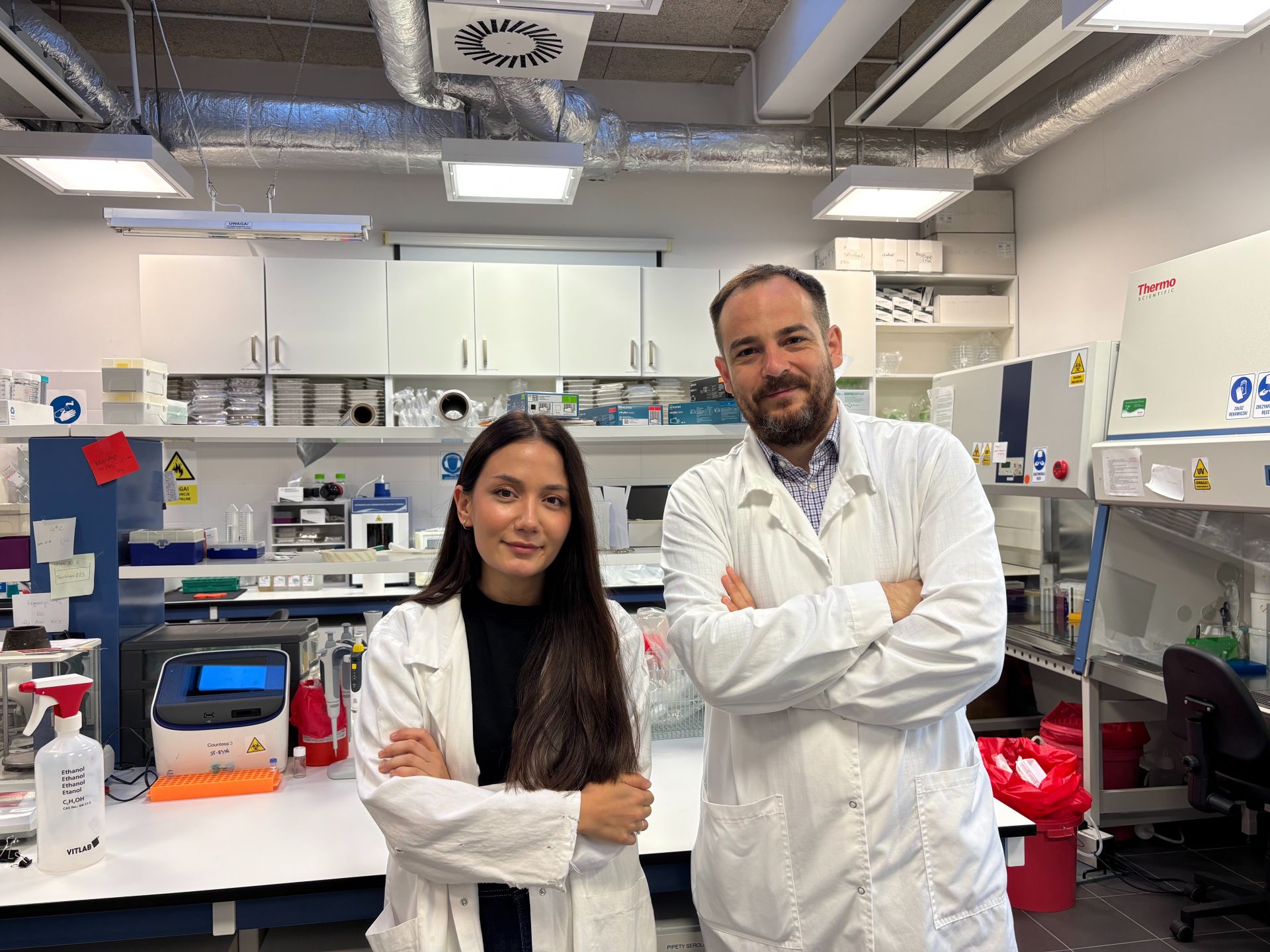 Prof. Marcin Poręba with PhD student Julia Nguyen
“It is so special to me that I had the opportunity to join the project when I was still a master’s student and then continue as a PhD student and NCN scholarship grantee. My first task was to contribute to the synthesis of the inhibitors for cell studies and, over time, my responsibilities also expanded to developing methods for their preparation on a multi-gram scale for in vivo studies. This experience gave me the opportunity to see the entire process of chemical compound development, from design and synthesis to application in advanced biological studies,” emphasises Julia Nguyen.
Prof. Marcin Poręba with PhD student Julia Nguyen
“It is so special to me that I had the opportunity to join the project when I was still a master’s student and then continue as a PhD student and NCN scholarship grantee. My first task was to contribute to the synthesis of the inhibitors for cell studies and, over time, my responsibilities also expanded to developing methods for their preparation on a multi-gram scale for in vivo studies. This experience gave me the opportunity to see the entire process of chemical compound development, from design and synthesis to application in advanced biological studies,” emphasises Julia Nguyen.
Those interdisciplinary studies combined biological chemistry, enzymology, cell biology and in vivo experiments. The research team from the Wrocław Tech was responsible for designing and synthesising caspases inhibitors, and analysing their properties, while the Genentech team was in charge of, among other things, advanced cell models, pharmacokinetic studies, and animal experiments. Their collaboration resulted in the discovery of a novel strategy of inhibiting pyroptosis and reducing the inflammatory response in a living organism.
The research project described in Nature is a result of international collaboration between Polish and American researchers, and proves that that academia and business, as well as youth and experience, can successfully complement one another.
Dr hab. Marcin Poręba, Wrocław Tech Professor. Works at the Faculty of Chemistry, Wrocław University of Science and Technology. Grantee of PRELUDIUM 5, SONATA 14, SONATA BIS 14, OPUS 15, OPUS 20 (LAP), and OPUS 24. His research, published in Nature, was funded by NCN under OPUS 15 Dissecting the mechanisms of proteolytic cross-talk underlying pyroptosis, a programmed inflammatory cell death.
Research paper: Gasdermin D-mediated delivery of caspase inhibitors to suppress pyroptosis, Nature, 03.08.2026