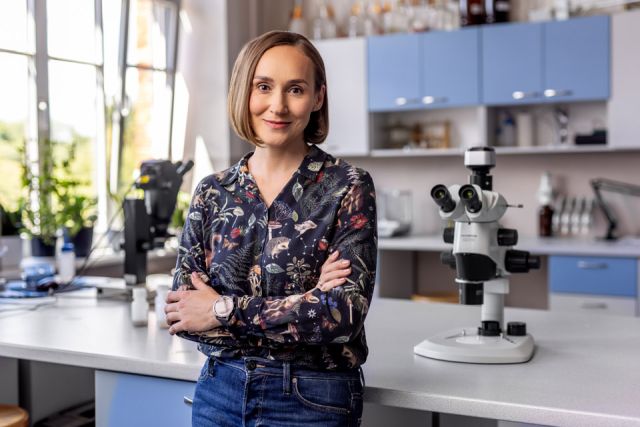
Principal Investigator
:
Prof. Dr hab. inż. Agnieszka Józefowska
Hugo Kołłątaj University of Agriculture in Kraków
Panel: ST10
Funding scheme
: BiodivMon
announced on
8 September 2022
The project “SoilRise: Raising Awareness of Soil Biodiversity and Increasing the Number of Monitored Sites Through Citizen Science (BiodivMon)” is an initiative combining advanced scientific research with extensive dissemination of knowledge about soil organisms. Its primary objective is to strengthen the role of humans in the protection and understanding of soil fauna, as well as to highlight the importance of earthworms as key organisms for the functioning of terrestrial ecosystems.
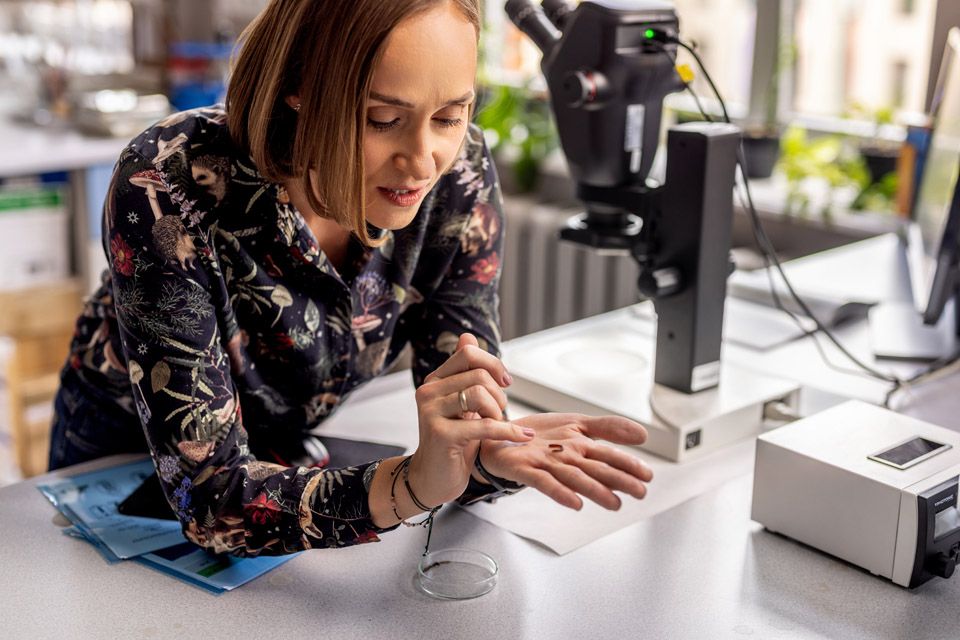 Prof. Dr hab. inż. Agnieszka Józefowska, photo: Łukasz Bera
Project implementation is based on a dual approach: on the one hand, scientific research is conducted on the variability of earthworm populations and their ecology; on the other, the concept of Citizen Science is being developed, engaging diverse social groups in monitoring soil organisms. The project addresses one of the major challenges of contemporary ecology — the limited knowledge of the species richness of soil organisms, understanding of which is essential for developing effective soil protection methods.
Prof. Dr hab. inż. Agnieszka Józefowska, photo: Łukasz Bera
Project implementation is based on a dual approach: on the one hand, scientific research is conducted on the variability of earthworm populations and their ecology; on the other, the concept of Citizen Science is being developed, engaging diverse social groups in monitoring soil organisms. The project addresses one of the major challenges of contemporary ecology — the limited knowledge of the species richness of soil organisms, understanding of which is essential for developing effective soil protection methods.
The SoilRise project implements a three-stage citizen science model based on a student-mentor system: i) Students of natural science programmes participate in training on earthworm ecology and standardised sampling methods; ii) They then engage local communities — farmers, gardeners, and community organisations — in collecting data on earthworms and soil; iii) The collected data are verified by scientists, ensuring high quality and international comparability.
SoilRise is international in scope and is carried out in cooperation with partners from Germany, Ireland, France, Austria, and Poland. The research focuses on questions concerning the impact of urban and rural environments on earthworm biodiversity, as well as the significance of climatic factors and historical land use for species composition. Analysing population diversity at the continental scale will enable a better understanding of the mechanisms shaping soil biodiversity and provide valuable data for environmental protection.
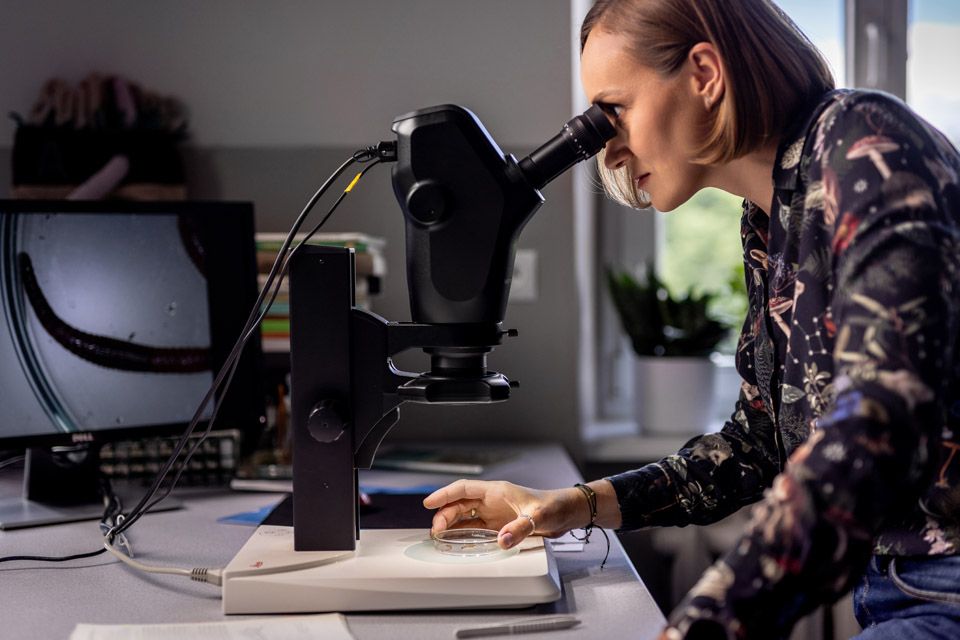 Prof. Dr hab. inż. Agnieszka Józefowska, photo: Łukasz Bera
Earthworms, as an important component of soil fauna, play a crucial role in nutrient cycling and soil-forming processes — they accelerate the decomposition of organic matter, influence soil aggregate structure, and increase the soil’s capacity for carbon storage. The role of soil organisms, both earthworms and enchytraeids, in shaping soil-forming processes and restoring soil functions in human-transformed ecosystems is the subject of research conducted within a second project funded under the SONATA BIS 11 call. Its objective is to determine the role of soil organisms in the development and regeneration of forest soils containing pyrogenic carbon (resulting from incomplete combustion of vegetation) and geogenic carbon (fossilised carbon remains).
Prof. Dr hab. inż. Agnieszka Józefowska, photo: Łukasz Bera
Earthworms, as an important component of soil fauna, play a crucial role in nutrient cycling and soil-forming processes — they accelerate the decomposition of organic matter, influence soil aggregate structure, and increase the soil’s capacity for carbon storage. The role of soil organisms, both earthworms and enchytraeids, in shaping soil-forming processes and restoring soil functions in human-transformed ecosystems is the subject of research conducted within a second project funded under the SONATA BIS 11 call. Its objective is to determine the role of soil organisms in the development and regeneration of forest soils containing pyrogenic carbon (resulting from incomplete combustion of vegetation) and geogenic carbon (fossilised carbon remains).
Both initiatives are united by the idea that understanding soil organisms and their functions is key to achieving healthy, stable soils capable of carbon sequestration. Research conducted by Professor Józefowska’s team deepens knowledge of the relationships between soil fauna, soil structure, and soil functioning, while simultaneously promoting public engagement in the protection of this fundamental — yet often overlooked — component of the environment.
Project title: SoilRise: Raising Awareness of Soil Biodiversity and Increasing the Number of Monitored Sites Through Citizen Science (BiodivMon)
Prof. Dr hab. inż. Agnieszka Józefowska
Agnieszka Józefowska is a staff member at the University of Agriculture in Kraków and was awarded the title of Professor in 2025. Her primary research focus is soil ecology. She investigates the role of soil fauna, particularly earthworms and enchytraeids, in soils transformed by human activity — from agricultural and urban areas to post-mining sites. She frequently translates her scientific findings into accessible popular science language, promoting knowledge about soil organisms. She has refined her scientific expertise through numerous research placements, including in Ireland, the Czech Republic, Canada, and Colombia.