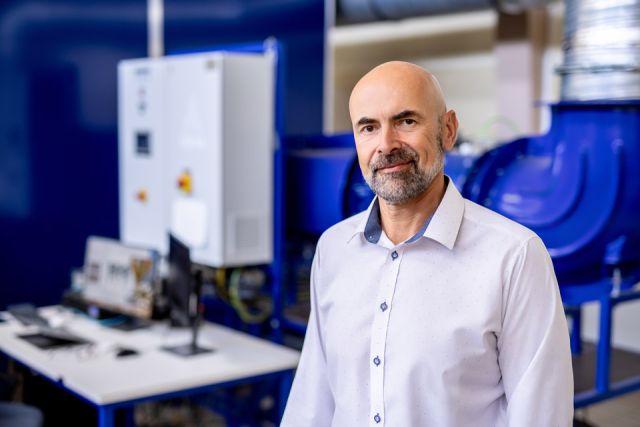
Principal Investigator
:
Prof. Dr hab. Artur Tyliszczak
Częstochowa University of Technology
Panel: ST8
Funding scheme
: OPUS 27
announced on
15 March 2024
The aim of the project is to analyse the physics of turbulent hydrogen combustion in an atmosphere composed of an oxygen–steam mixture, as well as hydrogen–ammonia combustion in air. In the former case, the elimination of nitrogen means that water vapour is the sole combustion product, making the process exceptionally clean. Combustion of hydrogen–ammonia mixtures, although resulting in the formation of harmful NOx compounds at high temperatures, does not generate carbon dioxide, thereby eliminating the primary contributor to the greenhouse effect. The project involves investigating flames in the vicinity of typical injection system components, such as a fuel nozzle and a bluff body. Project tasks focus on achieving an in-depth understanding of the mixing process and its intensification or suppression through enhanced interactions between large and small flow scales. These phenomena, which are still not fully understood, limit the development of low-emission and safe industrial devices, particularly in the context of hydrogen and ammonia combustion and hydrogen oxy-combustion, whose kinetics remain less well characterised than those of hydrocarbon fuels. Special attention is devoted to the following issues: (i) control of the shapes of internal and external recirculation zones forming in the wake of a bluff body and in close proximity to the fuel nozzle; (ii) flame dynamics and stability; (iii) pollutant reduction; (iv) strongly unsteady phenomena such as ignition and flame propagation or extinction, which are critical from the perspective of safety, reliability, environmental cleanliness and efficiency. A key outcome of the project will be an improved understanding of the mechanisms governing turbulent mixing and the combustion of hydrogen in oxygen and steam, as well as hydrogen–ammonia mixtures, together with insights into how these processes may be optimised.
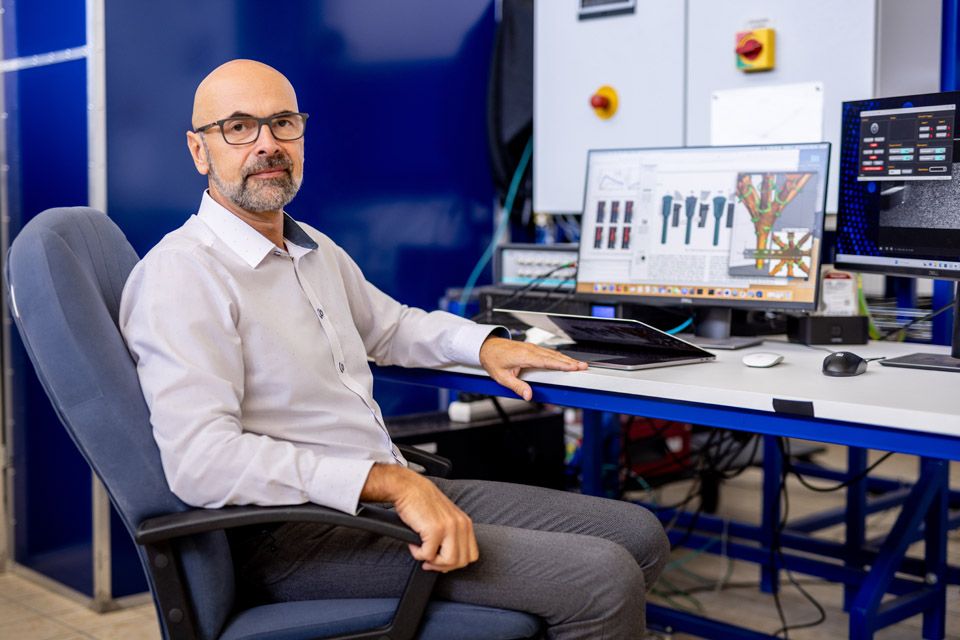 Prof. Dr hab. Artur Tyliszczak, photo: Łukasz Bera
Research methodology
Prof. Dr hab. Artur Tyliszczak, photo: Łukasz Bera
Research methodology
The project employs both passive and active flow control techniques. The former involve modifying the geometry of nozzles and bluff bodies and altering wall topology. Previous studies have demonstrated that liquid/gas jets issuing from irregularly shaped nozzles and channels, from sharp edges, or flowing along corrugated surfaces exhibit elevated turbulence levels and intensified mixing. The project will verify the extent to which these effects influence hydrogen and ammonia combustion. In addition to advancing knowledge of turbulent flames located downstream of fuel nozzles and bluff bodies, the project seeks to identify their preferred geometries for different fuel and oxidiser parameters (velocity, composition, temperature), depending on the adopted optimisation criterion (e.g. maximum/minimum flame lift-off height, maximum/minimum flame surface area, the most uniform temperature distribution, etc.). With regard to flame control under varying flow conditions, active control methods appear more effective. These assume the external supply of energy (excitation), the type and level of which can either be predetermined or adjusted in response to flow behaviour (interactive approach). The research is conducted using advanced mathematical modelling tools, computational fluid dynamics and specialised experimental apparatus.
Expected impact on the advancement of science
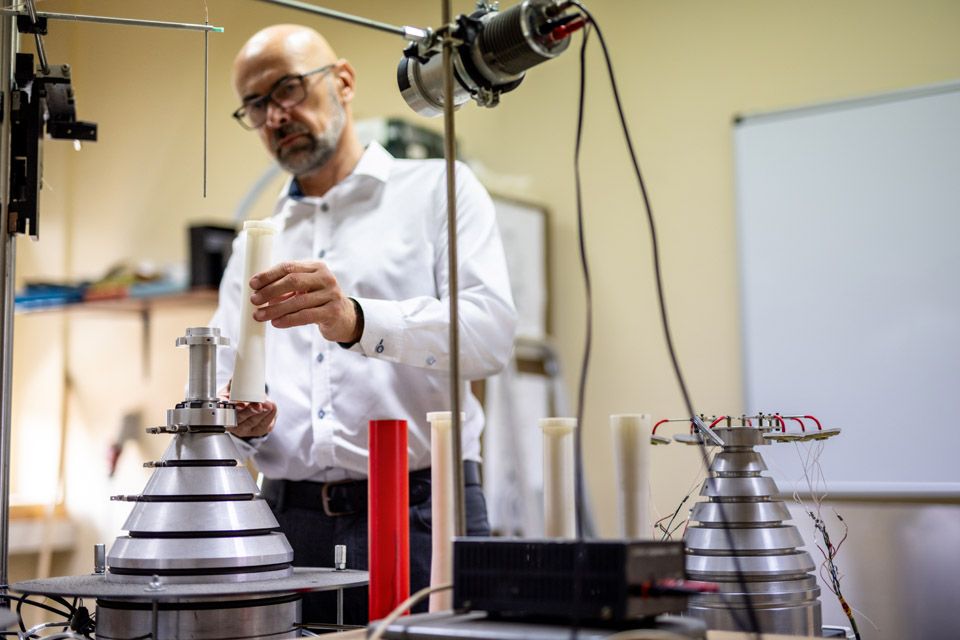 Prof. Dr hab. Artur Tyliszczak, photo: Łukasz Bera
The large-scale use of hydrogen and ammonia is currently constrained by insufficient knowledge of interactions between flow and flame, as well as by the lack of effective control methods for strongly unsteady combustion processes (e.g. flame stabilisation, propagation, autoignition and spark ignition). Autoignition, flame propagation and stabilisation are governed by the mixing of fuel and oxidiser in high-temperature regions, whereas spark ignition depends on whether it is initiated within a well-mixed combustible mixture. It can be assumed that accurate and precise prediction of mixing phenomena will enable effective control of both spark ignition and autoignition processes, as well as flame propagation and stabilisation, which is of critical importance for the efficiency and safety of many industrial devices. The possibility of modifying flame shape and dynamics is highly promising, and research in this direction will open new perspectives for both scientists and engineers.
Prof. Dr hab. Artur Tyliszczak, photo: Łukasz Bera
The large-scale use of hydrogen and ammonia is currently constrained by insufficient knowledge of interactions between flow and flame, as well as by the lack of effective control methods for strongly unsteady combustion processes (e.g. flame stabilisation, propagation, autoignition and spark ignition). Autoignition, flame propagation and stabilisation are governed by the mixing of fuel and oxidiser in high-temperature regions, whereas spark ignition depends on whether it is initiated within a well-mixed combustible mixture. It can be assumed that accurate and precise prediction of mixing phenomena will enable effective control of both spark ignition and autoignition processes, as well as flame propagation and stabilisation, which is of critical importance for the efficiency and safety of many industrial devices. The possibility of modifying flame shape and dynamics is highly promising, and research in this direction will open new perspectives for both scientists and engineers.
Project title: Optimisation of the Oxy-Combustion of Hydrogen and the Co-Combustion of Hydrogen with Ammonia Using Experimental Techniques, High-Performance Numerical Simulations and Machine Learning
Prof. Dr hab. Artur Tyliszczak
Professor at the Czestochowa University of Technology. Author of more than 100 publications, principal investigator and collaborator in projects funded by the National Science Centre, the National Centre for Research and Development, and Horizon 2020/Horizon Europe. He was a NATO scholarship grantee at the von Karman Institute for Fluid Dynamics (Belgium) and has worked at the University of Cambridge and the University of Southern California. Recipient of individual scientific awards from Faculty IV of the Polish Academy of Sciences (2017), the Grand Prix in the Prof. B. Skalmierski “Silver Violin” competition of PTMTS/PTETiS (2018), the Fulbright Senior Award (2019), and the Polish Ministry of Education and Science (2021). Member of the Committee on Mechanics of the Polish Academy of Sciences.